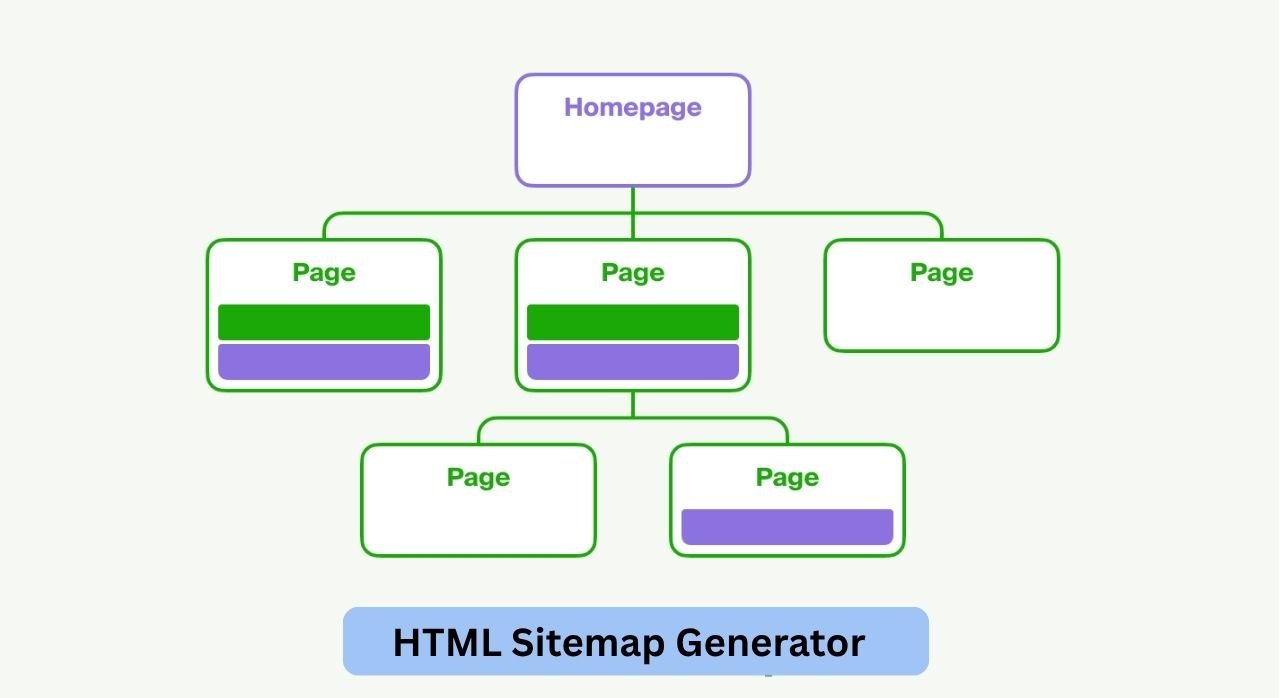
HTML Sitemap Generator – Improve Website Navigation and Structure
The Critical Role of HTML Sitemaps in Modern Web Navigation
When we talk about sitemaps in the context of SEO and website structure, most webmasters immediately think of XML sitemaps—the invisible files specifically formatted for search engine crawlers. However, an HTML sitemap serves an equally crucial, but fundamentally different, purpose. It is a user-facing directory, typically linked in a website's footer, that provides a clear, hierarchical, and easily navigable roadmap of every important page on your domain.
Unlike XML files, an HTML sitemap is meant for human eyes. In this definitive guide, we will explore why you shouldn't rely solely on complex navigation menus and how deploying a well-structured HTML sitemap can profoundly improve both your user experience (UX) and your organic search performance.
What Precisely is an HTML Sitemap?
To put it simply, an HTML sitemap is an organized index page. Think of it as the table of contents for your entire website. When visitors land on a robust, content-heavy domain, they can occasionally get lost in nested dropdown menus, confusing category structures, or dead-end landing pages. The HTML sitemap offers a fail-safe.
This visible page lists all corresponding links to your core service pages, blogs, and structural components. By doing so, it immediately bridges the gap between what a visitor is looking for and where that content actually lives. It is pure text, formatted in a clean list or semantic hierarchy without the distractions of heavy graphics or intricate UI elements.
The Overlooked SEO Value of Internal Linking
From a search engine optimization perspective, an HTML sitemap isn't just about human users—it's a masterclass in internal linking architecture. Search engine spiders, such as Googlebot, parse the web by following links from one page to another. If your website has complex Javascript menus or paginated blog structures that are difficult to crawl, a spider might miss deeper pages completely. This is commonly referred to in the SEO industry as the "orphan page problem."
By publishing a comprehensive HTML sitemap, you create a central hub with a flat architecture. Every single page linked on the sitemap becomes just one click away from a high-authority root page. This ensures that PageRank (link equity) flows efficiently throughout your domain, helping deeper product or blog pages rank better on search engine results pages (SERPs).
Key Ranking Benefits Include:
- Accelerated Indexation: Search engines discover new content faster when it's immediately added to a centralized sitemap.
- Flawless Crawl Paths: It mitigates crawler traps caused by faulty JavaScript or deep pagination frameworks.
- Keyword Relevance: The anchor texts utilized in your sitemap can act as minor but helpful relevancy signals for search algorithms.
How Our Generator Tool Simplifies the Process
Constructing this directory manually is tedious and error-prone, particularly for scaling sites. Our HTML Sitemap Generator allows you to instantly catalog your site structure with proper semantic HTML tags (such as <ul> and <li> lists). Instead of spending hours auditing your site's URLs, the formatting is handled automatically.
Once generated, simply paste the resulting HTML into a dedicated page, interlink it from your footer, and style it with your site's CSS. A highly accessible layout benefits everyone, ensuring you don't lose potential clients simply because they couldn't find the correct contact or service page.
Best Practices for Implementation
To extract the most value from your sitemap, keep the following industry best practices in mind:
- Categorize Logically: Don't just dump 500 links on a page. Organize them by product category, blog topics, or user intent (e.g., "For Developers," "For Marketers").
- Keep it Updated: A sitemap leading to 404 error pages offers a terrible user experience. Ensure your CMS updates the sitemap dynamically or schedule regular manual updates.
- Limit the Links: While there is no strict cap, pushing thousands of links onto a single HTML document can dilute link equity and overwhelm users. If your site is massive, consider paginating your sitemap or focusing only on top-level and tier-2 pages.
By refining your website's navigational structure with an HTML sitemap, you deliver a faster, more intuitive experience. It’s a low-effort, high-reward optimization that continues to stand the test of time in the ever-evolving landscape of technical SEO.